How to Choose a Sports Bra: Compression, Encapsulation and Fit Checks
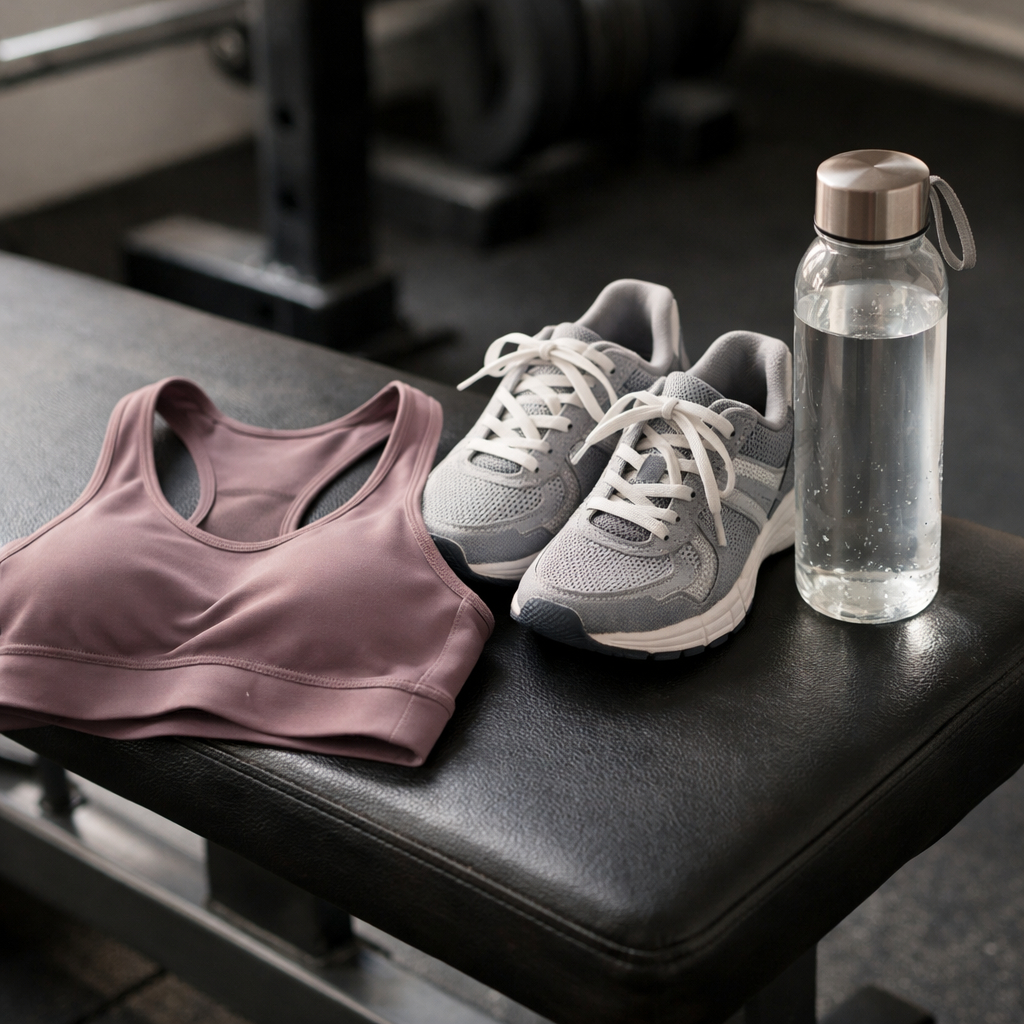
The first time I ran more than three miles, I did it in a soft, stretchy crop top I had bought because it looked like the ones in the store window. By the second mile I was holding my arm across my chest at every downhill. The problem was not the run. It was the garment. A sports bra is a piece of equipment, the same way running shoes are, and picking one well comes down to understanding how it is built and checking how it fits while you move, not while you stand still.
Here are the two main construction types, the fit checks I now do every time, and how to tell when an old favorite is done.
Why a sports bra is built differently
An everyday bra is designed for posture and shape while you sit, stand and walk. Exercise asks something else of it. When you run or jump, breast tissue moves, and it does not only bounce up and down. The Research Group in Breast Health at the University of Portsmouth in the UK, which has studied breast movement during exercise for many years, has described that movement as happening in several directions at once, up and down, side to side, and forward and back, tracing something like a figure-of-eight during running. The group’s work has also found that a well-fitted, supportive sports bra reduces that movement compared with an everyday bra or no bra, and that many exercisers report less discomfort when they wear one.
That is the practical point to take away: a sports bra is designed to limit movement in more than one direction, and the way it does that depends on its construction.
Compression vs encapsulation
Almost every sports bra uses one of two approaches, or a mix of both.
Compression
A compression bra holds the whole chest firmly against the body as a single unit. Think of the classic pull-over style with a wide band and no separate cups. It works by pressing tissue in and limiting how far it can travel. Compression styles are usually simple and easy to wash. Many people with smaller cup sizes find a compression bra is all they need, even for running.
The trade-off is shape and, for larger cup sizes, effectiveness. Pressing more tissue flat against the chest takes a lot of fabric tension, which can feel restrictive around the ribs and still leave noticeable movement.
Encapsulation
An encapsulation bra has individual cups, much like an everyday bra, so each side is surrounded and supported separately. The cups may be molded, seamed or lined, and the bra is usually sized by band and cup rather than small, medium and large. Encapsulation tends to control movement better for fuller busts, gives a more natural shape under a T-shirt, and spreads support across the band, cups and straps instead of relying on compression alone.
The trade-off is that fit matters more. A cup that is too small or too large undoes much of the benefit, so you need to know your band and cup size. If you are not sure of yours, start with how to measure your bra size at home and treat the result as a starting point.
Combination styles
Many higher-support designs combine the two: separate cups to hold each side, plus a firm outer layer or panel that compresses. These are common in bras sold for running and other high-impact sport.
| Feature | Compression | Encapsulation | Combination |
|---|---|---|---|
| How it supports | Presses tissue against the chest | Holds each side in its own cup | Separate cups plus a compressive layer |
| Usual sizing | XS to XL | Band and cup | Usually band and cup |
| Shape under clothes | Flatter, single shape | Rounder, separated | Separated, held close |
| Often chosen for | Smaller cup sizes, lower-impact sessions | Fuller busts, everyday training | Running, jumping, high-impact sport |
| Main drawback | Less effective as cup size rises | Fit must be precise | Warmer and more structured |
Which approach you need also depends on the activity. A yoga class and a trail run ask for very different levels of support; the impact-level guide linked below matches the two.
Fit checks to do before you buy a sports bra
Standing still in a fitting room tells you very little about a sports bra. These are the checks I run through every time.
1. The band
The band does most of the supporting work. It should sit level all the way around, snug enough that it does not ride up when you lift your arms, but not so tight that it leaves you short of breath. A sports bra band is usually a little firmer than an everyday band. If you can pull it more than an inch or two away from your back, it is probably too loose.
2. The cups or front panel
In an encapsulation bra, the cups should hold all of the tissue with no spilling over the top or sides and no wrinkling or empty space at the apex. In a compression bra, look for even pressure without a hard edge cutting in across the top. Underwires, if there are any, should sit flat against the ribs and fully surround the breast tissue rather than sitting on it.
3. The straps
Straps should feel secure without digging into your shoulders. If they are carrying a lot of weight, that usually means the band is too loose. Racerback and crossback straps stay put better during arm-heavy movement; adjustable straps let you fine-tune the fit. Wider, padded straps spread pressure more evenly.
4. The movement test
This is the one most people skip. In the fitting room, jog in place, do a few jumping jacks, swing your arms, reach overhead and twist side to side. Watch for movement you would not want on a run, a band that slides up, straps that slip, and any seam or edge that rubs. If the bra feels uncomfortable after thirty seconds of this, it will be worse after an hour.
5. The fabric and finish
Look at the inside as well as the outside. Flat seams and covered edges reduce chafing on long sessions. Moisture-wicking synthetic fabrics dry faster than cotton, which tends to stay damp. Mesh panels help with ventilation.
Common fit problems and what they usually mean
- Band rides up at the back: the band is too loose, or the straps are too tight and pulling it upward.
- Red marks on the shoulders: the straps are doing work the band should be doing.
- Chafing under the arms: the cup or armhole edge is cut too high or too low for you, or the fabric is staying wet.
- Spilling at the top or sides: the cups or the compression panel are too small.
- Still too much movement: the style may not suit the activity; try an encapsulation or combination design.
Many of these mirror the everyday fit problems covered in signs your bra does not fit, so it is worth reading that alongside this one.
A note on discomfort: some ache or tenderness after exercise is something many people notice and is often what sends them looking for a better bra. Pain that is sharp, persistent, one-sided, or comes with a lump, skin changes or discharge is not a fit question. See a doctor about it.
When to replace a sports bra
There is no exact number of months or washes after which every sports bra fails. How long one lasts depends on how often you wear it, how hard you train, and how you wash it. Some people go through a bra in a season; others get a couple of years from one in rotation. The garment itself will tell you when it is done.
Look for these signs:
- The band no longer feels firm on its loosest setting, or stretches easily when you pull it.
- The fabric looks shiny, thin or pilled, or has lost its spring when you stretch it.
- The straps have stretched and no longer adjust tight enough.
- Molded cups have creased, dented or lost their shape.
- You notice more movement on a run than you used to in the same bra.
- Your size has changed, which happens with training, weight change, pregnancy and age.
Rotating two or three bras gives the elastic time to recover between wears, and washing gently helps too. Heat is hard on elastic, so air-drying is the usual advice. The same principles apply to every bra in your drawer; there is more on that in how to wash bras without ruining them.
A simple way to decide
If you are standing in front of a wall of options, narrow it down in this order:
- Decide what you will mostly use it for: walking and yoga, gym and cycling, or running and jumping.
- Choose a construction that matches: compression for lower impact and smaller cup sizes, encapsulation or a combination for fuller busts and higher impact.
- Start from your measured size, then let the band, cup and strap checks guide you up or down.
- Do the movement test every time, even with a style you have worn before, because sizing varies between makers.
It took me several wrong purchases to learn that the right sports bra is the one that disappears once you are moving. If you are aware of it mid-run, something about the fit or the style is off.
Where to go next
To match support to your sport, read sports bra impact levels explained, or browse everything in the Sports & Nursing section.