Sports Bra Impact Levels Explained: Low, Medium and High
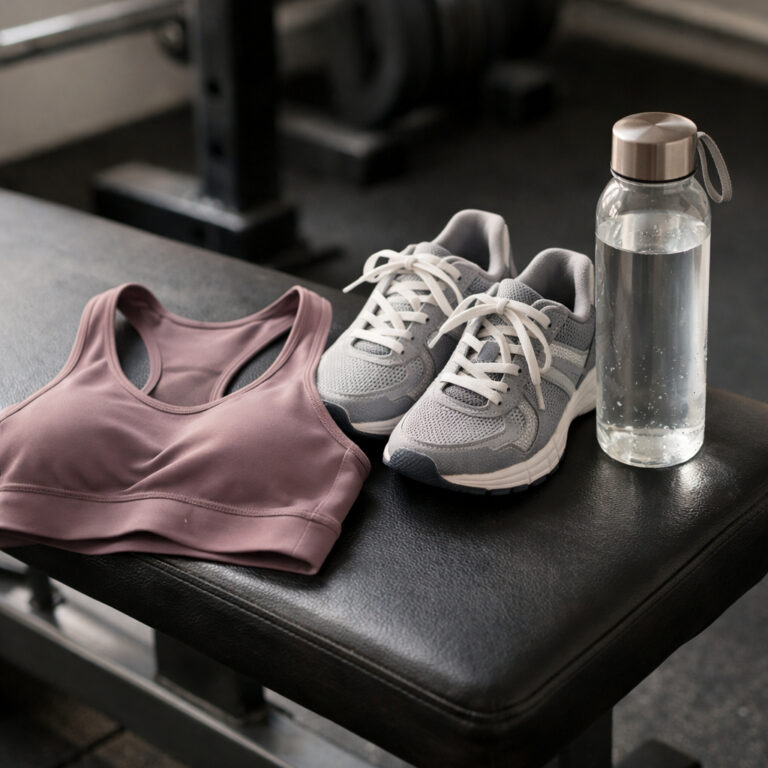
My gym bag used to hold one sports bra, and I wore it for everything: Sunday yoga, Wednesday spin class, Saturday long runs. It was perfect for yoga, fine on the bike, and miserable on the road. It took me an embarrassingly long time to realize the bra was not bad. It just was not built for running. The labels on sports bras, low, medium and high impact, exist to solve exactly that problem, and once you know what they mean, choosing gets a lot easier, including knowing when only a high impact sports bra will do.
What “impact” actually means
Impact describes how much your body moves, and especially how much it bounces, during an activity. Running, jumping and anything with repeated landings create a lot of vertical movement. Cycling and rowing create less up-and-down movement but more leaning and reaching. Yoga and stretching create very little.
Breast tissue does not just move up and down when you exercise. Researchers in the Research Group in Breast Health at the University of Portsmouth have described it moving in several directions at once during running, roughly tracing a figure-of-eight, and their work has shown that supportive sports bras reduce that movement. The more an activity throws you around, the more support you need to keep things still and comfortable.
One thing worth knowing up front: impact ratings are not a regulated standard. Each maker decides for itself what counts as “medium” or “high,” so a medium impact bra from one label can feel firmer than a high impact bra from another. Use the rating to narrow your options, then let the fit and the movement test decide.
Low impact sports bras
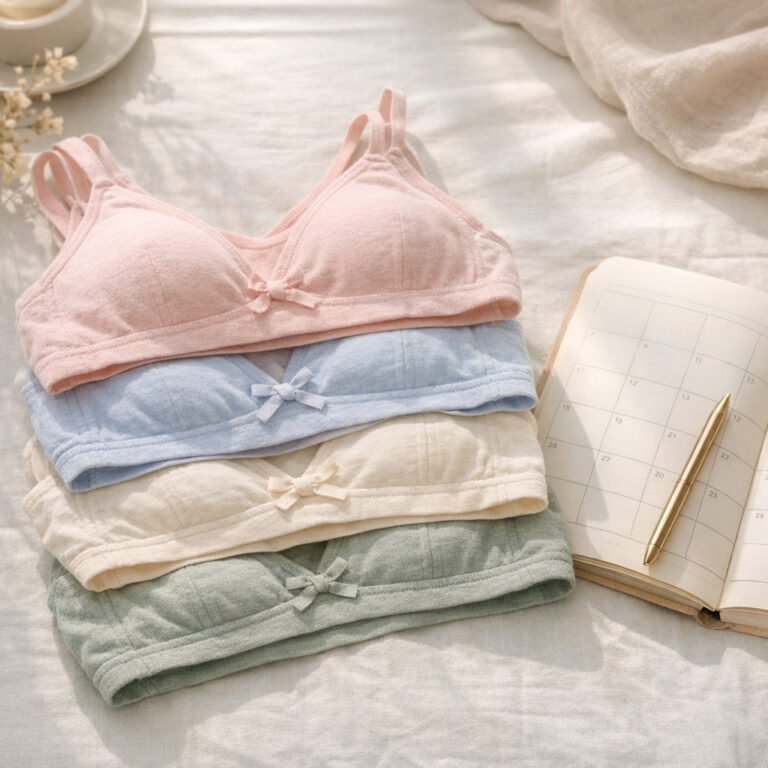
Low impact bras are the softest of the three. They are often pull-on styles with light compression, thin or adjustable straps, and removable pads or no padding at all. Many have no hooks, no wires and minimal seams.
Good for: yoga, Pilates, stretching, walking, gentle mobility work, and as a comfortable lounge or travel bra.
Watch out for: using one for anything with bouncing. A low impact bra is designed to be comfortable while you stay mostly grounded, not to hold you still while you jump. Many people with smaller cup sizes do find a low impact bra fine for more than the label suggests, but that is something to test, not assume.
Medium impact sports bras
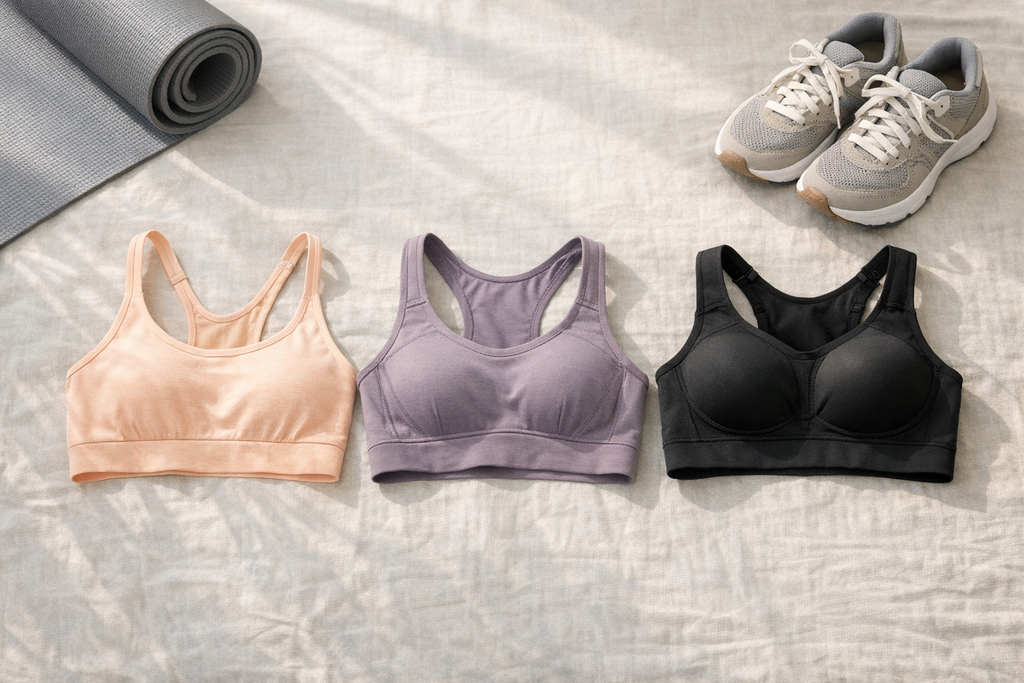
Medium impact bras add structure. You will often see a firmer band, wider or racerback straps, molded or lined cups, and sometimes a hook-and-eye closure so you can tighten the band. Some use compression alone; others have separate cups.
Good for: cycling, hiking, strength training, rowing, skiing, and many gym classes that mix lifting with some cardio.
Watch out for: classes that sound gentle but include jumping. A circuit class with box jumps or burpees can push past medium impact, so think about the hardest part of the session rather than the average.
High impact sports bras
A high impact sports bra is built to limit movement as much as possible during activities with repeated landings or sudden direction changes. Typical features include:
- A firm, wide band, often with several rows of hooks
- Encapsulated cups, or a combination of separate cups and an outer compression layer
- Wide, padded, adjustable straps, often convertible to a racerback or crossback
- Less stretch in the fabric, especially at the front
- Higher necklines and fuller side coverage
Good for: running, jogging, HIIT, jumping rope, plyometrics, aerobics, court sports like tennis and basketball, and horse riding.
Watch out for: over-tightening to compensate for the wrong size. A high impact bra should feel snug and secure, not like it is limiting your breathing. If it does, try a different size or style rather than putting up with it.
Activities matched to impact levels
The table below is a general guide. Where an activity appears at two levels, it depends on intensity: an easy hike is medium impact, while a fast descent over rough ground can feel like running.
| Activity | Usual impact level | Notes |
|---|---|---|
| Yoga, Pilates, stretching | Low | Some flowing or power yoga styles move toward medium |
| Walking | Low | Fast or hill walking can call for medium |
| Weight training | Low to medium | Medium if the session includes jumps or sprints |
| Cycling, spin classes | Medium | Standing climbs and out-of-the-saddle sprints add bounce |
| Hiking | Medium | Steep descents can push toward high |
| Rowing, elliptical | Medium | Smooth movement, but lots of reaching and leaning |
| Skiing, skating | Medium | Depends heavily on terrain and style |
| Dance classes | Medium to high | Anything with jumping counts as high |
| Running, jogging | High | Including treadmill running |
| HIIT, bootcamp, plyometrics | High | Burpees, box jumps and jump squats are high impact |
| Tennis, basketball, netball | High | Sudden sprints and changes of direction |
| Horse riding | High | Rising trot and canter create repeated vertical movement |
How cup size changes the picture
Impact levels are written as though everyone needs the same support for the same activity, but that is not quite how it works in practice. In general, the larger and heavier the breast tissue, the more support you will want at any given level. Someone wearing a small cup size might run comfortably in a medium impact bra; someone wearing a fuller cup might want a high impact sports bra even for a spin class.
Construction matters here too. Compression-only styles tend to work best at smaller cup sizes, while encapsulated and combination styles usually do a better job as cup size rises. The difference between those two approaches is explained in more detail in how to choose a sports bra.
Testing support in the fitting room
Because ratings vary so much, the only reliable check is movement. Put the bra on, fasten it on the loosest hook if it has one, adjust the straps, and then:
- Jog in place for twenty to thirty seconds.
- Do a few jumping jacks or small hops.
- Swing your arms forward and back, as you would when running.
- Reach both arms overhead and check whether the band rises.
- Twist side to side and bend forward.
You are looking for movement you can live with, a band that stays level, straps that stay put, and nothing that rubs or cuts in. If you are buying for a high impact activity and you notice obvious bounce while jogging in place, that bra will not feel better on a real run.
Sizing between sports bras and everyday bras is not always the same, either. If you are between sizes, the band-and-cup relationships described in bra sister sizes can help you work out what to try next.
Signs you need more support than you have
Sometimes the label was right when you bought the bra and your training has simply moved on. A few clues that it is time to step up a level:
- You find yourself crossing an arm over your chest on downhills or during jumps.
- You avoid certain exercises in a class because of how the bra feels, not because of the exercise itself.
- The band slides up your back partway through a session.
- You notice an ache after workouts that you do not notice after rest days.
- You have started running, joined a court sport or added interval training since you bought it.
Any one of these on its own may be a fit problem rather than a support problem, so check the band, cups and straps first. If the fit is right and the bra still is not enough, a higher impact level is the next thing to try.
Do you need one bra for each level?
Not necessarily. If most of your activity is high impact, a well-fitted high impact bra will usually also be comfortable for lower-impact days, though it may feel warmer and more structured than you need for yoga. If you mostly do low and medium impact activity, a medium impact bra may cover everything.
Where people get caught out is going the other way: wearing a low impact bra for running because it is comfortable. Comfortable standing still is not the same as supportive while moving.
A practical approach is to buy for your most demanding regular activity first, then add softer styles for the rest of your week if you want them. Rotating bras also gives the elastic time to recover between wears, which helps them last.
And a reminder: discomfort during exercise is common and often improves with better support, but pain that is sharp, persistent, or comes with other changes you have noticed is something to raise with a doctor rather than solve with a new bra.
Where to go next
For the construction details behind each level, read how to choose a sports bra, and when your favorite starts to feel loose, check how often to replace bras.