How to Wash Bras by Hand and by Machine Without Ruining Them
The first good bra I ever bought lasted about four months. It went into the washer with jeans and towels every week, came out tangled around a sweatshirt, and spent an hour tumbling in a hot dryer. By spring the band had gone wavy, one wire had worked its way through the fabric, and the molded cups had a permanent crease. Nothing was wrong with the bra. Everything was wrong with how I washed it. If you have ever wondered how to wash bras so they keep their shape, the short answer is: less heat, less friction, less twisting. The longer answer is below.
Why bras need different handling from the rest of your laundry
A bra is a small engineering project. Most contain some combination of elastic (usually a fiber such as spandex or elastane blended with nylon or polyester), a hook-and-eye closure, adjustable strap hardware, sometimes underwires sitting in fabric channels, and often molded foam cups. Each of those parts fails in its own way:
- Elastic is sensitive to heat and to chlorine bleach. Both break down stretch fibers over time, which is why a band that has been through a hot dryer often feels loose long before the fabric looks worn.
- Underwires are held in place by stitched channels. Repeated agitation and bending work the wire against the channel ends until it pokes through.
- Molded cups are shaped foam. Folding, crushing or tumbling them can leave dents and creases that do not come out.
- Hooks snag on lace, mesh and knit fabrics, both on the bra itself and on everything else in the load.
- Lace and fine mesh are easily pulled and torn by friction.
None of this means bras are fragile. It means the ordinary laundry routine, built for towels and denim, is harder on them than it needs to be.
Always check the care label first
Before anything else, read the label sewn into the band or side seam. It is the manufacturer’s instruction for that specific combination of fabrics, and it overrides any general advice, including mine. Some bras are labeled hand wash only. Some specialty fabrics, such as silk or embellished pieces, may need even gentler treatment. If a label says no machine washing, believe it.
How to hand wash a bra, step by step
Hand washing is the gentlest option, and it is less of a chore than it sounds. A basin and ten minutes is all it takes.
- Fasten the hooks. Closing the hook-and-eye stops it catching on the lace or mesh while you wash.
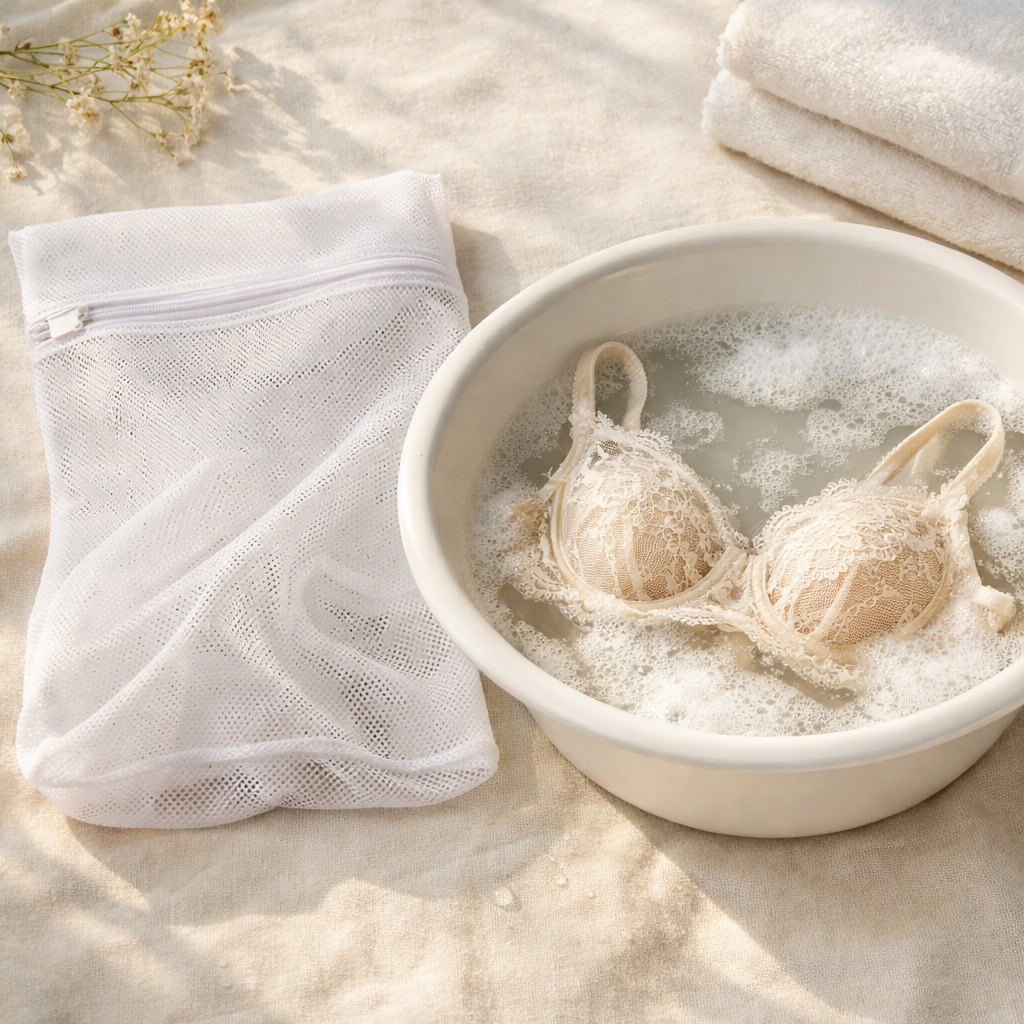
- Fill a basin or clean sink with cool or lukewarm water. Avoid hot water, which is harder on elastic.
- Add a small amount of mild detergent. A gentle detergent meant for delicates or hand washing is ideal. A teaspoon or so is usually enough for a couple of bras; too much soap is hard to rinse out.
- Submerge and soak. Let the bra sit for about 10 to 15 minutes so the detergent can loosen body oils and deodorant residue.
- Swish and press gently. Move the bra through the water and press the fabric with your fingertips, paying a little extra attention to the band and the inside of the cups. Do not scrub hard or wring.
- Rinse in clean, cool water until no suds remain. Leftover detergent can leave fabric stiff and attract dirt.
- Press out the water. Lay the bra flat on a clean towel, roll the towel up, and press. This removes most of the water without twisting the cups or wires.
If you are washing several bras, sort them by color first. Dark and brightly dyed bras can bleed, especially in the first few washes.
How to machine wash bras safely
Not everyone has time to hand wash every week, and many everyday bras tolerate the machine reasonably well when you set it up carefully. These are the habits that make the biggest difference:
- Use a mesh laundry bag. This is the single most useful step. It keeps straps from wrapping around other clothes, protects hooks from snagging, and reduces how much the bra gets bent and tumbled. One or two bras per bag works better than cramming in five.
- Fasten the hooks before the bra goes in the bag.
- Choose the delicate or hand-wash cycle with cold or cool water and a low spin speed.
- Wash with similar, lightweight items. Leave out jeans, towels and anything with zippers or heavy buttons; they add friction and weight.
- Use mild detergent and skip chlorine bleach. Bleach weakens elastic fibers. Fabric softener is also worth skipping for bras with moisture-wicking or technical fabrics, since it can leave a coating on the fibers.
Molded cup bras and anything with heavy lace or embellishment are the ones I keep out of the machine. Even in a bag, a spin cycle can fold molded cups in half. Sports bras, which are built from sturdier knit fabrics, usually do fine on a gentle machine cycle; there is more on that in my guide to choosing a sports bra.
Hand wash or machine: a quick comparison
| Bra type | Best method | Notes |
|---|---|---|
| Molded or foam cup (including T-shirt bras) | Hand wash | Machine spin can crease the cups; dry with cups in their natural shape |
| Underwire, unlined | Hand wash, or gentle cycle in a mesh bag | Agitation is what pushes wires through the channel |
| Lace or delicate mesh | Hand wash | Friction snags fine fibers |
| Wireless or soft cotton | Gentle cycle in a mesh bag | Usually the most forgiving style |
| Sports bra | Gentle cycle, cool water | Wash soon after wearing; skip fabric softener |
| Strapless or longline | Hand wash | Silicone grip strips and boning prefer gentle handling |
Drying: where most bras are ruined
If you only change one habit, make it this one: keep bras out of the dryer. Dryer heat is one of the quickest ways to tire out elastic, and tumbling dents molded cups and stresses wires. Air drying takes longer but costs nothing.
- Reshape while damp. Smooth the cups back into their natural curve with your hands and straighten the band.
- Dry flat or hang by the center. Laying the bra flat on a towel or a drying rack is safest. If you hang it, drape it over a line or rack by the center gore (the piece between the cups) so the weight is spread out. Hanging a wet bra by its straps lets the water weight stretch them.
- Keep it out of direct heat. Radiators and strong direct sun can be hard on elastic and can fade colors.
- Let it dry fully before storing. Folding or stacking a damp bra can lead to musty smells and, in the worst case, mildew.
How often should you wash a bra?
There is no official rule, and you will see different numbers repeated online. A practical approach is to wash an everyday bra after every few wears, sooner in hot weather or if it smells or looks soiled. Sports bras are the exception: they absorb sweat, so most people wash them after every workout. Letting a bra rest a day between wears also gives the elastic time to recover, which is one reason a small rotation helps. My post on how often to replace bras goes into rotation in more detail.
Small fixes and common questions
What about stains?
Treat them early, with cool water. Gently dab a little mild detergent onto the spot and let it sit before washing. Avoid rubbing hard on lace or mesh, and avoid chlorine bleach. For anything unusual, check the care label or test a hidden spot first.
My bra smells even after washing. Why?
Often it is detergent or deodorant buildup trapped in the fibers, especially in synthetic fabrics. A longer soak in cool water with a small amount of detergent, followed by a very thorough rinse, usually helps. Make sure the bra is drying fully and in a place with some airflow.
A wire is poking through. Is the bra finished?
Not necessarily. If you sew, a few tight stitches across the channel end, or a small fabric patch, can hold a wandering wire for a while. But a wire that has come through once tends to try again, and it is a sign the bra has seen a lot of agitation. Treat it as a hint to change the washing routine for your other bras.
Can I wash bras with other delicates?
Yes, as long as the other items are light and have no zips, hooks or rough trims. Washing like with like is the rule.
A simple routine that works
Here is the routine I settled on after years of getting it wrong. Molded cup and lace bras get a quick basin soak once a week, usually while I am doing something else in the kitchen. Everyday wireless bras and sports bras go into mesh bags on a cold, gentle cycle with other light clothes. Everything air dries flat on a rack. Nothing goes in the dryer. My bras now last a great deal longer than that first one did, and they keep their shape in the drawer too, which is the other half of the story; the guide to storing bras covers that part.
Where to go next
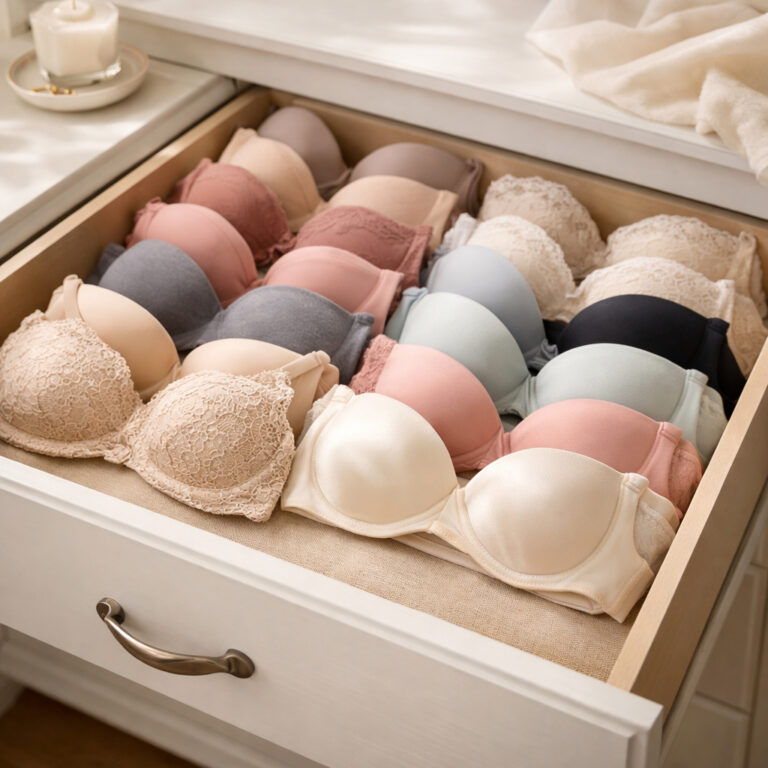
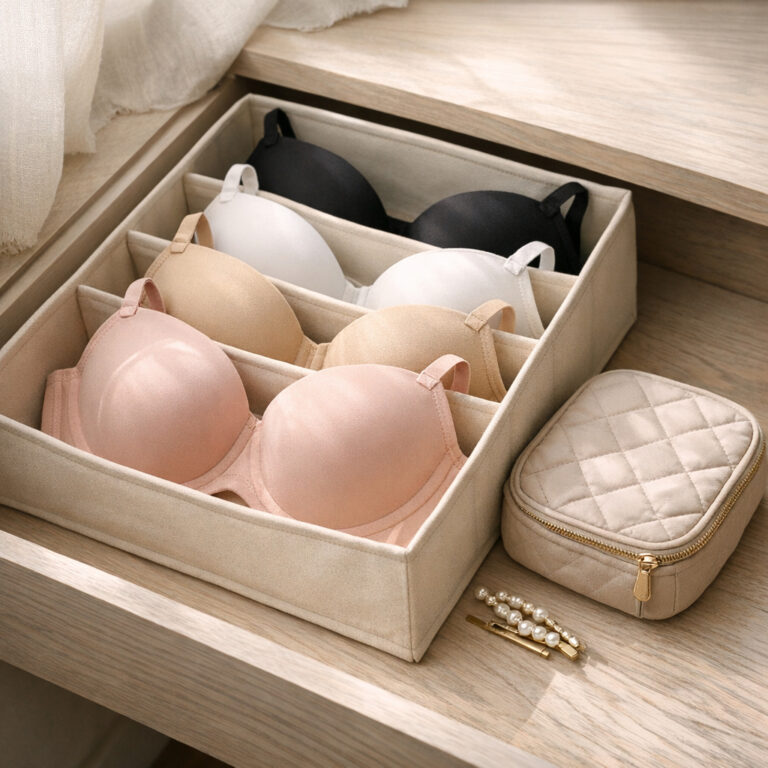
Once your bras are washing well, read how to store bras so molded cups keep their shape, or browse the rest of the Care & History section.